
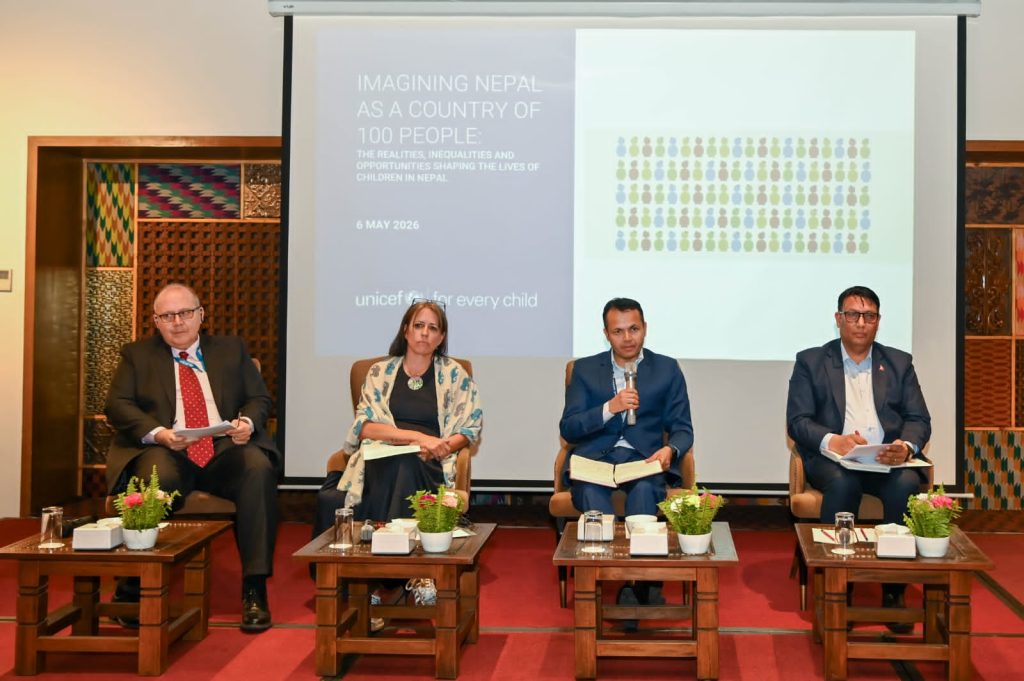
Kathmandu. UNICEF Nepal has unveiled a new advocacy brief titled “Imagining Nepal as a Country of 100 People”, aimed at highlighting the realities, inequalities, and opportunities shaping the lives of children across the country.
The publication is based on findings from the Nepal Multiple Indicator Cluster Survey (MICS) 2024–25, conducted by the National Statistics Office in partnership with UNICEF. It introduces a unique approach by reimagining Nepal as a population of 100 people, turning complex statistics into more relatable human stories and making disparities easier to understand.
According to Dhundi Raj Lamichhane, Deputy Chief Statistician of the National Statistics Office, Nepal’s key challenge is not just accelerating progress but ensuring that development is fair and inclusive, especially for children who have been left behind.
The brief highlights gaps between provinces, as well as differences between urban and rural areas, and across economic and social groups. By simplifying data, it reveals both progress made and inequalities that are often hidden behind national averages.
Alice Akunga, UNICEF Representative to Nepal, emphasized that behind every statistic is a child whose health, education, safety, and future are at stake. While many children are doing well, she noted that a significant number still face disadvantages from early life.
The report not only identifies challenges but also outlines practical and long-term solutions for the next five years. These include large-scale investments as well as immediate actions to accelerate progress for children.
Reshu Aryal Dhungana, Member of the National Planning Commission, reaffirmed the government’s commitment to improving children’s well-being. She highlighted the need to expand access to quality healthcare services in remote areas and called for stronger collaboration among government bodies, development partners, and other stakeholders.
UNICEF stated that the brief is intended to guide policy and investment decisions, ensuring that Nepal’s development remains inclusive, equitable, and sustainable.
Describing the report as a call to action, UNICEF urged all stakeholders to act with urgency so that every child in Nepal regardless of their background can survive, thrive, and reach their full potential.


