
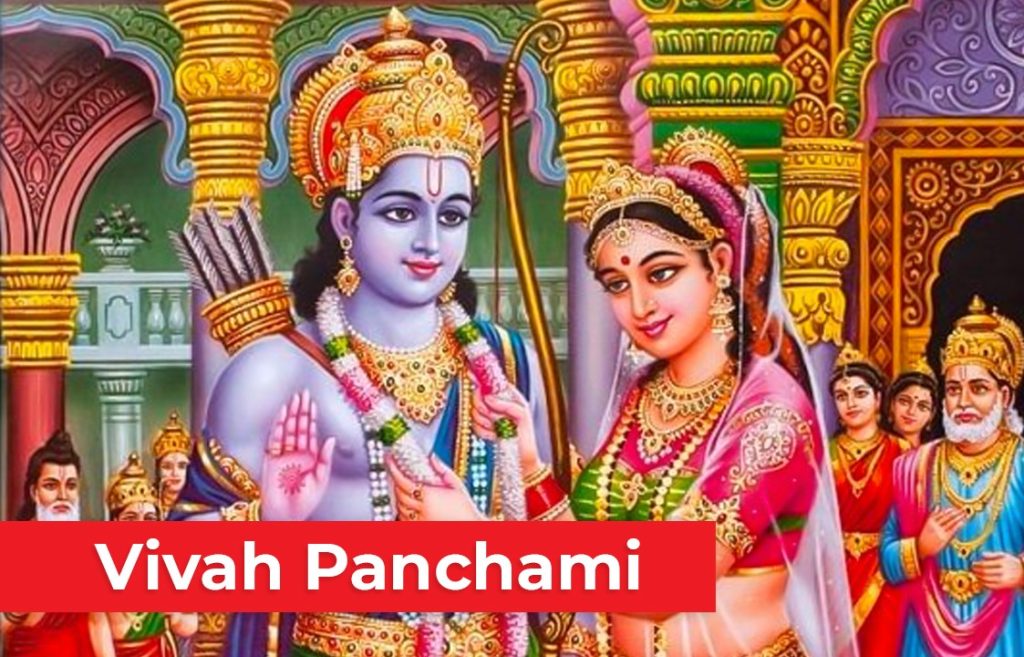
Kathmandu.The Bibaha Panchami festival, commemorating the divine union of Princess Sita and Lord Ram in the Treta Yug, is being observed across the country today with religious fervour and cultural splendour. The centre of nationwide celebrations is Janakpurdham, the historic birthplace of Sita and capital of ancient Mithila, where thousands of devotees have gathered to mark the occasion.
Observed on the fifth day of Marga Shukla Paksha in the month of Mangsir, the festival features a week-long series of rituals rooted in Mithila’s ancient traditions. The celebrations began with Nagar Darshan, during which two children dressed as Ram and Laxman were taken in a procession around the revered Janaki Temple.
The second day, Phulbari Leela, witnessed colourful processions and cultural dance performances. This was followed by Dhanusha Yagya on the third day and Tilakotsav on the fourth day. Devotees today marked Matkor, a ritual involving the collection of sacred soil, while the festival will conclude with tomorrow’s grand re-enactment of the Ram Sita Swoyambar—a symbolic portrayal of their divine engagement ceremony.
The day after the Swoyambar, saints and religious leaders from various Indian cities including Ayodhya—who arrive in Janakpurdham to participate in the celebrations—are given a ceremonial farewell, signifying the formal end of the festival.
Bibaha Panchami draws people from diverse faiths, including Buddhism and Sikhism, who join Hindu devotees in paying homage to the divine couple. Throughout the festival, prayers and rituals honouring Ram and Sita fill Janakpur, transforming the city into a vibrant hub of devotion, culture, and spiritual unity.


