
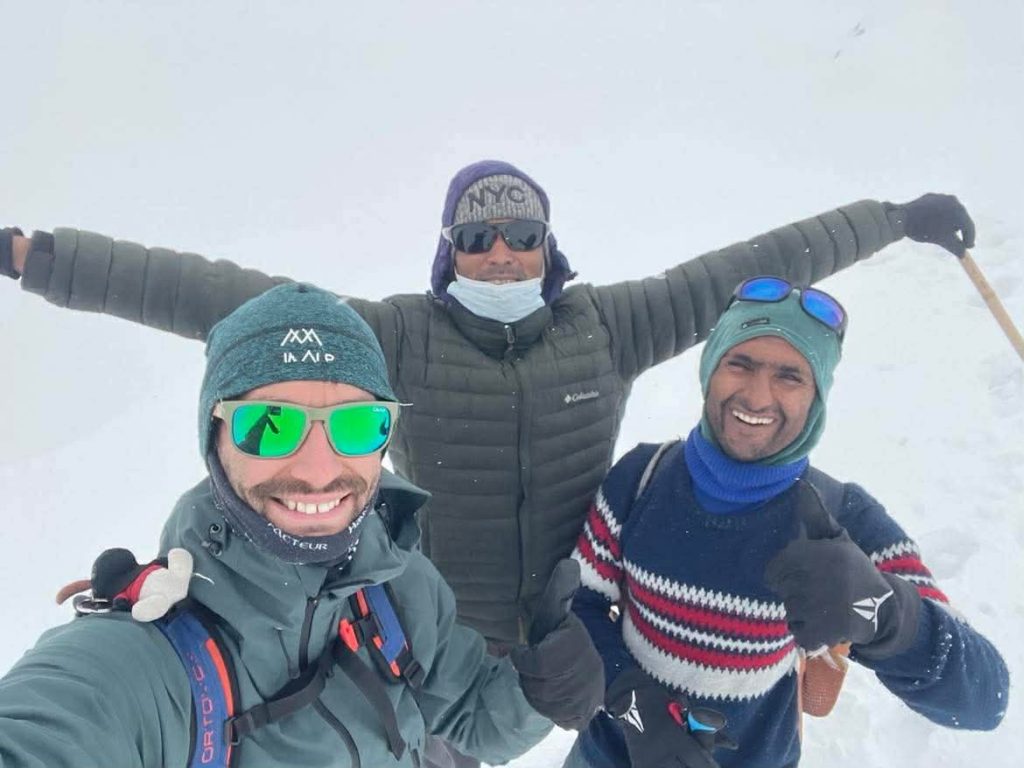
Kathmandu . New examples of silent communication are emerging along Nepal’s Himalayan trekking trails not through spoken words, but through sign language. The growing involvement of deaf trekking guides is opening a new chapter of inclusive tourism in Nepal.
Chop Prasad Poudel from Kalika Rural Municipality-5 in Rasuwa and Chhiri Sherpa from Solukhumbu have become leading figures in this transformation.
Climbing Himalayan trails requires more than physical endurance; it also demands confidence, courage, and opportunity. Chop Prasad and Chhiri Sherpa are emerging as examples of that determination.
After years of working in tourism as a porter and hotel cook, Chop Prasad recently completed the world-famous Manaslu Circuit Trek, bringing new hope to Nepal’s inclusive tourism movement. He successfully finished the challenging 15-day trek, which reaches an altitude of 5,106 meters. His achievement is not only a personal success story but also an inspiration for people with disabilities.
“I joined the trekking guide training after learning about a program for deaf youth jointly operated by the Nepal Tourism Board and the United Nations Development Programme under the Sustainable Tourism Project,” Chop Prasad said. “The training significantly changed my trekking experience. It boosted my confidence and taught me how to manage difficult situations.”
After completing the training, he connected with two French tourists through social media. Following the necessary preparations, he guided them through the Manaslu Circuit Trek with the support of an assistant.
Manaslu is considered one of Nepal’s most difficult trekking routes, but Chop Prasad said the knowledge he gained in mountain safety, tourist handling, and practical trekking skills made the journey manageable.
“After this trek, my confidence has grown even more. Now I want to explore other trekking routes across Nepal,” he said.
The training included mountain safety, first aid, trail management, hospitality, cultural interpretation, environmental responsibility, crisis management, and Nepal’s geographical and cultural diversity.
Chop Prasad’s journey highlights the growing opportunities for the deaf community in Nepal’s tourism sector. Another strong example is Chhiri Sherpa.
For years, Chhiri Sherpa has been guiding foreign tourists through Himalayan trekking routes using sign language. He independently manages trekking plans and preparations through video calls and sign-based communication.
Recently, he successfully guided an American tourist and his deaf Nepali wife through the Gokyo Lakes, Cho La Pass at 5,375 meters, and Everest Base Camp before concluding the trek in Lukla.
According to Chhiri Sherpa, sign language creates a different level of trust and connection during travel.
“We communicated through signs throughout the journey. More than words, understanding and behavior became important,” he said.
Tourism stakeholders have described the trekking guide training program for deaf youth as a major step toward inclusive tourism development in Nepal.
Santosh KC, president of the National Federation of the Deaf Nepal, said deaf youth can make important contributions to Nepal’s tourism industry.
According to the World Health Organization, around 430 million people worldwide are affected by hearing loss, while more than 70 million people use sign language.
Dharmaraj Dawadi, manager of the Sustainable Tourism Project, said the initiative demonstrates how Nepal’s tourism sector is becoming more inclusive.
“Nepal’s tourism is no longer limited to mountains and natural beauty,” he said. “Practices of inclusion and equal opportunity are making tourism more humane and far-reaching.”
The experiences of Chop Prasad and Chhiri Sherpa show that with proper opportunities and training, the deaf community can become capable guides and strong representatives of Nepal’s tourism industry. They have also urged the government, tourism entrepreneurs, and stakeholders to create more jobs and opportunities for deaf and differently-abled youth.


