

Kathmandu . Speakers at a special program organized on the occasion of the 73rd International Everest Day expressed serious concern over the growing risks facing the Himalayan region due to climate change, stressing that mountain conservation should be treated not only as a national responsibility but also as a global obligation.

The event, jointly organized on Friday by the Ministry of Culture, Tourism and Civil Aviation, Nepal Tourism Board, and the Department of Tourism, highlighted the urgent need to protect the Himalayas and promote sustainable mountain tourism.
Speaking at the program, Minister for Culture, Tourism and Civil Aviation Khadga Raj Poudel ‘Ganes’ said that Mount Everest is not merely a peak to conquer, but a symbol of human courage, spirituality, and deep emotional experience.

“Everest is not something to be conquered; it is something to be experienced. Perhaps not everyone is destined to have that experience,” Minister Poudel said. “The mountains are not only Nepal’s heritage but the shared property of the entire world. Unless we protect the Himalayas, humanity itself cannot remain safe.”
He warned that rising global temperatures are causing rapid melting of Himalayan snow, with consequences extending from mountain ecosystems to coastal regions and human life across the planet. “Everest and other mountains are under threat. Human consciousness must rise even higher than the mountains themselves,” he added.

Ministry Secretary Mukunda Prasad Niraula also stressed that climate change is having an increasingly visible impact on Himalayan regions, making mountain conservation an urgent necessity. “Climate change is intensifying rapidly, and protecting the mountains has become today’s major responsibility,” he said.

President of the Nepal Mountaineering Association, Phur Geljen Sherpa, emphasized the important role of the private sector in promoting Nepal’s mountain tourism. He stated that the upcoming tourism legislation should be private sector-friendly.

“Since 1976, we have continuously worked for the development of Nepal’s mountains, the convenience of climbers, and the international promotion of mountain tourism,” Sherpa said. “The government alone cannot move forward without cooperation from the private sector.”

Director General of the Department of Tourism, Ramkrishna Lamichhane, informed that seven people including foreign climbers and Nepali Sherpa guides lost their lives during this year’s spring climbing season on Everest and other mountains. He also noted that several Nepali and foreign climbers are currently undergoing treatment in Nepal and abroad.
Lamichhane said Everest Day should be viewed as an opportunity to review new ideas, research, conservation efforts, management strategies, and the promotion of mountain tourism. He stressed the need for ecological balance, international promotion of Nepal’s Himalayan identity, and better tourism governance.
He also expressed hope that the proposed tourism bill under preparation would introduce practical and effective provisions for the mountain tourism sector.
During the event, various awards were presented to individuals contributing to mountaineering, search and rescue operations, research, and mountain tourism.
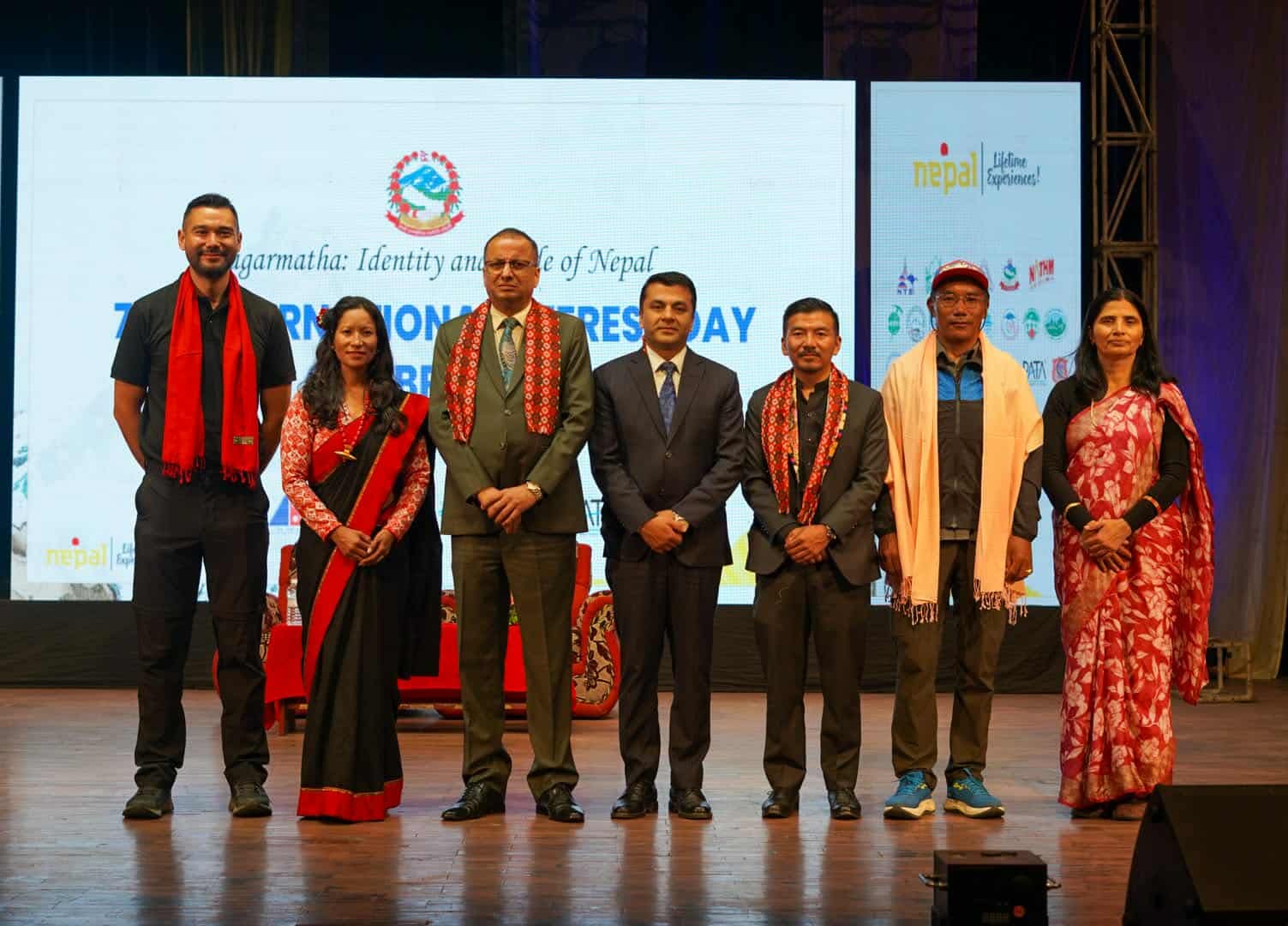
Pasang Dawa Sherpa, who has summited Everest 31 times, received the “International Everest Award.” Helicopter pilot Priya Adhikari was honored with the “Tenzing-Hillary Search and Rescue Award,” while Tenzing David Sherpa received the “Tenzing-Hillary Record Climber Award.” Purnima Shrestha was awarded the “Pema Doma Women Climber Award.”
Similarly, geographer Prof. Dr. Bishal Nath Upreti received the “Tenzing-Hillary Research Award” for his contribution to the study and research of Nepal’s Himalayan region.
The program also recognized the contributions of the “Icefall Doctors” team responsible for rope fixing in the Khumbu Icefall, route-fixing teams on Everest and Lhotse, and liaison officers deployed at the Department of Tourism’s temporary field office.
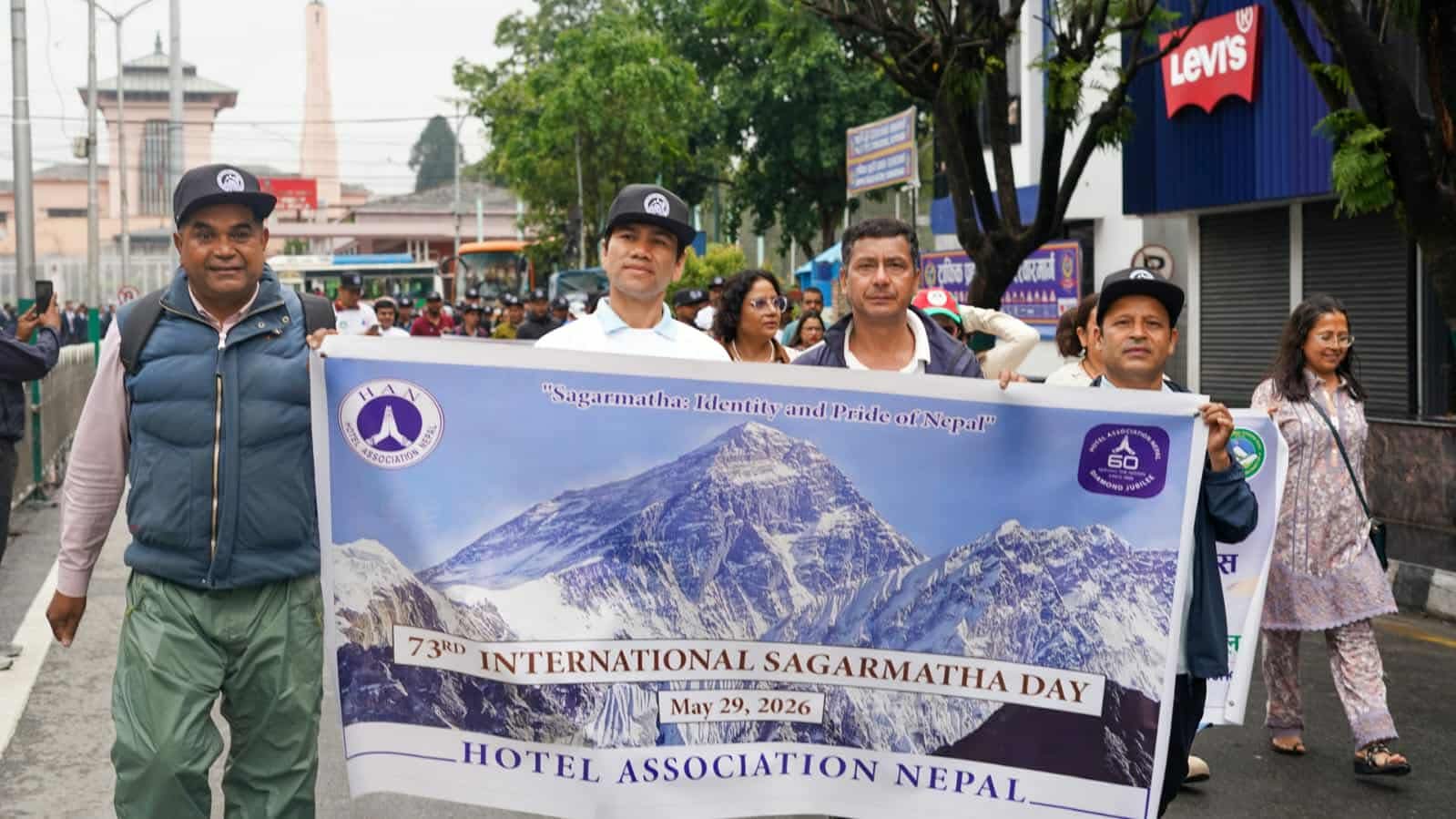
This year’s International Everest Day was celebrated under the slogan “Everest: Identity and Pride,” with special emphasis on sustainable mountain tourism, Himalayan conservation, climate change challenges, and preservation of mountain culture.


