
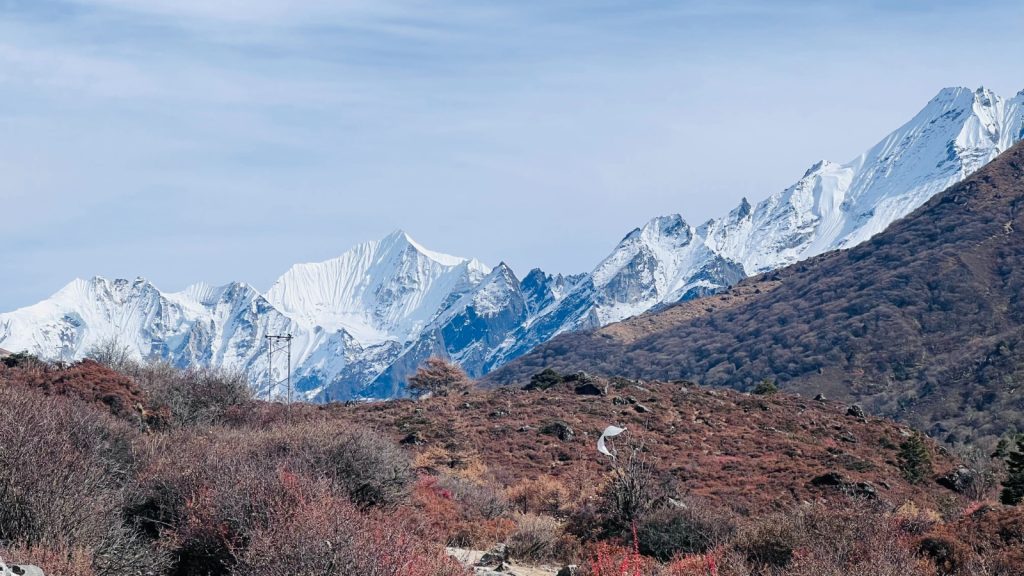
Kathmandu . Ever wondered what it’s like to taste cheese made at nearly 4,000 meters, where yaks graze on wild Himalayan grasses and Swiss traditions meet Nepali mountain life? At 3,800 meters in Nepal’s Langtang Valley, a small stone building has been quietly producing cheese since 1955, making it the country’s first and highest-altitude cheese factory. The Kyanjin Cheese Factory turns yak and chauri milk into tangy, firm wheels using methods Swiss dairy experts introduced nearly seven decades ago.
In this blog about the Langtang yak cheese factory, we’ll walk you through everything you need to know before planning your visit. You’ll discover the factory’s fascinating Swiss-Nepali origins, learn how traditional cheese-making actually happens at high altitude, and get practical tips for planning your trek to Kyanjin Gompa. Whether you’re a cheese lover or just curious about this unique slice of Himalayan culture, you’ll find all the essential details right here.
Why Langtang is famous for yak cheese ?
Langtang is well known for its yak cheese, since it is the site of Nepal’s very first cheese factory-the Kyanjin Cheese Factory-which was set up in 1955 at 3,800 meters in the tiny hamlet of Kyanjin Gompa. This innovative center was the outcome of a collaboration between the Nepali government and Swiss dairy specialists who introduced to the Himalayas the European alpine cheese-making traditions. The factory makes cheese from yak and chauri milk using procedures derived from Swiss ones, and apart from being a production unit, it also serves as a cultural point of interest for trekkers.
The reason this area is so suitable for cheese-making is the combination of altitude, grazing conditions, and traditionally kept herds. Yaks live quite comfortably at over 3,000 meters, where even domestic cattle have a hard time, and the unspoiled Himalayan meadows around Kyanjin Gompa are perfect for the yaks.
High-altitude production: The factory is located at almost 4,000 meters, where yaks have their natural diet of wild alpine grasses
Historical significance: It was the first factory in Nepal producing cheese in an organized manner, and other factories came much later
Unique product: Cheese made of milk from yak and chauri (yak-cow crossbreed) having a characteristic tangy flavor
History of Nepal’s first yak cheese factory
The story of how Swiss dairy experts and Nepali herders built a cheese operation at nearly 4,000 meters is as unlikely as it is enduring. What started as a development experiment in 1955 has become a working piece of Langtang Valley’s cultural and economic fabric.
Swiss collaboration and the 1955 founding
The Kyanjin Cheese Factory was set up due to a partnership between Nepal and Switzerland in the mid-1950s. Swiss dairy specialists, inspired by their own alpine cheese-making traditions, provided technical know-how and equipment to set up production in one of Nepal’s most isolated valleys. The Swiss team not only taught the local herders European cheese-making skills but also introduced the change to yak milk as a substitute for cow milk during the process.
Initially, the local yak herders were doubtful. Many refused to give the milk to the foreign-operated facility even after being offered money. Gradually, the trust developed over months and years as the herders observed their neighbors making a steady and dependable income through the sale of milk.
Original purpose and development mission
The factory’s founding goal was practical: give remote mountain communities a way to preserve surplus milk and generate income from a product that could travel to Kathmandu. Before the factory existed, yak herders had limited options for their milk beyond immediate consumption or basic butter production.
Cheese offered something different. A wheel of aged cheese could survive the multi-day journey down the valley and fetch prices in urban markets that raw milk never could.
Connection to Langtang livelihoods
For almost seventy years local Tamang and Sherpa families have been delivering milk to the factory. This setting is actually a good match for the already established seasonal herding patterns of the families. Most of the time they move their yaks to higher pastures, and during production season fresh milk from herders is brought to the factory each morning.
It turned out that this approach introduced economic stability into the area where the possibilities for cash income were a rarity. Tamang constitute the main ethnic group in Langtang Valley, whereas Sherpa families primarily dwell in the higher-altitude settlements.
How yak cheese is made at Kyanjin Gompa
Cheese production at Kyanjin is based on techniques brought by Swiss experts in 1955 and adjusted by various means to the characteristics of yak milk in a high-altitude area. The manufacturing period is from late spring to early fall, as yaks feed on alpine meadows and the availability of milk is stable.
Yak herding and milking at high altitude
In fact, the animals are fed by the natural pastures that are composed of wild Himalayan grasses and herbs, which are also a major factor in the flavor profile of the cheese. The taste of the cheese is totally different from that of the customer’s dairy products found in the lowlands.
From late spring till the beginning of autumn, yaks and chauris feed on alpine meadows near Kyanjin Gompa. A chauri is a hybrid of a yak and a domestic cow. These animals give more milk than pure yaks, yet they are still able to withstand the harshness of the high-altitude environment. Each morning herders milk the animals, and after that they take the fresh milk to the factory to prevent it from getting spoiled.
Traditional Himalayan cheesemaking methods
The production methods at Kyanjin are largely in line with those of Swiss hard cheeses, even if they have been changed to suit the local environment and simple equipment. The milk is first heated and then naturally cultured to form curds, which are then made into cheese wheels and kept in cool storage rooms in the factory building.
Milk collection: Delivery in the morning from the herders located near the factory and within walking distance.
Curdling: Natural fermentation with the use of traditional starter cultures.
Pressing and shaping: Cheese wheels of 2-4 kgs made by hand.
Aging: Depending on firmness desired, the cheese may be kept for weeks or months.
The operation as a whole does not involve modern refrigeration. The high altitude and the stone building combine to provide a naturally cool atmosphere during all seasons.
Why the cheese factory is significant for the local communities
The local communities are the ones who benefit the most from the cheese factory, as it provides them with a constant source of income and helps revive the local culture in one of the most inaccessible parts of Nepal.
The Kyanjin Cheese Factory is more than a trekking highlight when it comes to the local economy. It is the main source of revenue for the Tamang and Sherpa families who have been bringing the milk and working in this factory for almost 70 years. Recognizing its role in the valley is one of the ways to find out why buying your cheese is important beyond the act of purchase.
The cheese factory is a great source of income for the Tamang and Sherpa families through milk supply, and it also provides them with local jobs, which is very helpful to reduce migration.
Contribution to Sustainable Tourism in Langtang
Purchasing the cheese from Kyanjin Gompa is one of the most direct ways trekkers can benefit the local economy and, at the same time, help maintain the traditional yak herding practices.
What to expect when visiting the cheese factory
Visiting the Kyanjin Cheese Factory is a straightforward experience; this is a working production facility first and a tourist stop second. The building is modest, the equipment is basic, and the atmosphere is functional rather than polished.
Location and how to reach Kyanjin Gompa
Kyanjin Gompa is a small settlement of teahouses, lodges, and the cheese factory at the upper end of the main Langtang Valley trekking route. There’s no road access; reaching the factory requires trekking from Syabrubesi, the trailhead village accessible by jeep from Kathmandu. The standard trek takes 3–4 days each direction.
The factory building sits near the center of the settlement, within a few minutes’ walk of all accommodation options.
The visitor experience at the factory
Set realistic expectations here. This is a working production facility, not a tourist attraction with guided tours and gift shops. The building is modest, the equipment is basic, and the operation is small-scale.
On a typical visit, you might see cheese wheels aging on wooden shelves, watch workers pressing fresh curds, or simply browse the available products. Factory staff are generally welcoming, but a brief visit of 15–30 minutes is typical for most trekkers.
Cheese tasting and purchase opportunities
Fresh and aged cheese is available for purchase directly at the factory and at nearby teahouses throughout Kyanjin Gompa. Tasting before buying is common and expected.
Tip: If you’re interested in watching cheese production, visit in the morning when fresh milk arrives and processing begins.
Tips for tasting and buying yak cheese in Langtang
Buying cheese in Kyanjin Gompa is pretty straightforward, but a few small things can make a big difference. A good choice travels well, tastes better, and doesn’t turn into a mess halfway through your trek.
Check freshness and quality of yak cheese
Fresh cheese is soft, mild, and honestly best enjoyed right there in the valley. It doesn’t travel well, especially in warm conditions, so eat it within a day or two if you can.
Aged cheese is a different story. It’s firmer, stronger in taste, and much better for carrying back to Kathmandu.
Quick checks before buying:
● Fresh cheese: soft texture, light flavor, eat locally
● Aged cheese: solid, richer taste, good for 1–2 weeks travel
● Always check: clean look, even texture, no strange smell
How to store and carry cheese during the trek
They usually wrap it in paper or cloth, so don’t overthink it, but don’t leave it like that either. Put it inside a plastic bag to avoid moisture leaking into your gear.
Keep it somewhere cool in your backpack. Not pressed against your spot gets warm fast, and cheese doesn’t like heat at all. Even the aged one softens if you’re not careful with temperature.
Prices and how much to pay
Prices are quite standard at the factory and nearby teahouses, so no need for bargaining.
● Small tasting piece: NPR 200–400
● Bigger block (for sharing or gifting): NPR 800–1,500
Simple rule: play and enjoy, and that’s it.
How to plan your visit to Langtang yak cheese factory
Reaching the Kyanjin Cheese Factory requires advance planning; this isn’t a day trip from Kathmandu. The trek demands several days of walking, proper timing around seasonal operations, and realistic expectations about altitude and trail conditions.
Best time to visit Langtang Valley
The best time to visit Langtang Valley is spring (March–May) and autumn (September–November), when the weather is clear and trekking conditions are at their best. Spring brings a lively feel to the valley with blooming rhododendrons, active yak grazing, and smooth operation of the cheese factory, while autumn offers crystal-clear skies after the monsoon, fresh mountain air, and some of the sharpest Himalayan views you’ll see. On the other hand, monsoon and winter are less reliable; trails can get slippery or blocked, and the cheese factory may slow down or pause operations, making travel more difficult compared to the ideal trekking seasons.
Suggested trekking routes to Kyanjin Gompa
The standard Langtang Valley trek follows a single main route from Syabrubesi through Lama Hotel, Langtang Village, and up to Kyanjin Gompa. Most trekkers spend 1–2 nights at Kyanjin Gompa before returning via the same trail or continuing to Gosaikunda for a longer circuit.
Trek duration and difficulty level
The round-trip trek from Syabrubesi to Kyanjin Gompa usually takes 6–8 days at a relaxed pace with proper acclimatization, and it’s generally suitable for reasonably fit trekkers without any technical climbing skills. The main challenge is altitudeKyanjin Gompa is at 3,800 meters, and nearby hikes can go up to 4,500–5,000 meters, where breathing starts to feel noticeably harder.
Nearby attractions at Kyanjin Gompa
Kyanjin Ri viewpoint
This 4,773-meter viewpoint offers panoramic views of Langtang Lirung (7,227m) and the surrounding peaks. The hike from Kyanjin Gompa takes 2–3 hours each way and is manageable for acclimatized trekkers.
Langtang Lirung glacier
A relatively flat walk from Kyanjin Gompa leads to the base of the Langtang Lirung glacier. The 2–3 hour round trip provides close-up views of glacial ice and the massive north face of Langtang Lirung without significant elevation gain.
Tserko Ri summit hike
For trekkers seeking a more challenging day, Tserko Ri (4,984m) offers even more expansive views than Kyanjin Ri. The climb is steeper and longerexpect 5–7 hours round tripbut rewards with 360-degree Himalayan panoramas on clear days.
Recovery and current status after the 2015 earthquake
The 2015 earthquake had catastrophic effects on Langtang Valley. Most of Langtang village was buried under avalanche and 350 people lost their lives. The factory of cheese at Kyanjin Gompa got some damage but was saved, and the settlement in the surrounding area was less affected than the lower villages.
International aid and the Swiss development community support reconstruction effortswhich have led to the restoration of the factory to full production. The path is completely open, tea houses have been rebuilt, and the valley is once again a popular destination for trekkers.
Experience Langtang Valley with expert guidance
The Langtang yak cheese factory is a rare Himalayan gem that blends culture, history, and community life rather than just tourism. Built on a long Swiss-Nepali partnership, it reflects how local herding traditions and resilience helped the valley rebuild after hardship. Reaching here takes effort through a scenic trek filled with changing landscapes, teahouse hospitality, and mountain views. At 3,800 meters, tasting fresh yak cheese becomes a memorable highlight of the journey. Langtang Valley Trek isn’t a casual stop; it’s an experience earned through travel, culture, and nature. For deeper exploration, guided local tours help you experience the valley more meaningfully.
If Langtang really makes you want to explore deeper, you might also want to check out other legendary trekking routes of Nepal, such as the Everest Base Camp Trek and the Manaslu Circuit Trek. Both of them are equally beautiful Himalayan landscapes, local culture, and high-altitude adventure experiences for lovers of the outdoors.


